How Much Does a Dump Truck Load Cost and Weigh?
Updated 2026-08-07 · Simple Lend Marketplace
A full dump truck load of gravel, dirt or sand delivered commonly runs a few hundred dollars, driven by material type, quantity and haul distance. A standard tandem-axle dump truck holds roughly 10-16 cubic yards; a tri-axle carries 15-20+ yards. By weight, one cubic yard is roughly 1.4-1.7 tons of gravel, 1.3-1.5 tons of sand, 1.0-1.3 tons of dirt or topsoil, and just 0.4-0.5 tons of mulch. Dense material hits the legal weight limit before the bed looks full.
How many yards and tons fit in a dump truck load
Capacity depends on the truck. A standard tandem-axle (twin rear axle) dump truck typically holds around 10 to 16 cubic yards of material, while a tri-axle can carry roughly 15 to 20 or more cubic yards. Yards measure volume, so a heaped bed of light material looks the same size whether it weighs six tons or fourteen. That is why sellers quote loose material two ways: by the cubic yard (volume) and by the ton (weight).
Weight per cubic yard varies a lot by material. As a rough guide, one cubic yard runs about 1.4 to 1.7 tons for gravel, 1.3 to 1.5 tons for sand, 1.0 to 1.3 tons for dry dirt or fill, 1.0 to 1.3 tons for topsoil, and only about 0.4 to 0.5 tons for mulch. Moisture pushes those numbers up, so wet sand or saturated fill weighs noticeably more than the dry figures.
Put those together and a full tandem load of gravel is commonly in the 14 to 20 ton range, while the same truck brimming with mulch might carry only 5 to 8 tons. So 'how many tons in a dump truck of gravel' and 'how many tons of dirt in a dump truck' have different answers even in the identical truck, because the material, not just the bed, sets the limit.
Why a full load of gravel is fewer yards than a full load of mulch
Every dump truck has a legal gross weight limit set by its axle configuration and state road rules. Dense material like gravel, crushed rock or wet dirt reaches that weight ceiling before the bed is visually full, so a 'full load' of gravel is often fewer cubic yards than the truck could physically hold. Load light, fluffy mulch and you can heap the bed to the top and still be well under the weight limit.
This matters for two reasons. First, it explains why a gravel delivery may look only two-thirds full while a mulch delivery is piled high. Second, overloading a truck to squeeze in extra yards risks fines and axle damage, and can require oversize or overweight permits. The Federal Highway Administration publishes the permit framework, and vehicle weight classes (Classes 1-13) determine what a given truck is rated to carry.
For a buyer or hauler, the practical takeaway is to order by weight for dense material (gravel, sand, fill) and by volume for light material (mulch, some topsoil). If you are moving material regularly, the number that actually governs your day is the truck's legal payload, not the size of the bed.
What a load costs, and when owning the truck beats paying per load
Delivered pricing for a full dump-truck load of gravel, dirt, sand or topsoil commonly lands in the low-to-mid hundreds of dollars, but the total is driven by three things: the material itself (decorative or crushed stone costs more than plain fill dirt), the quantity in yards or tons, and the haul distance from the pit or yard to your site. Longer trips and premium material push the number up, so treat any figure you see online as illustrative, not a fixed quote. Simple Lend Marketplace does not sell gravel or other materials, so always confirm price and weight with your local supplier.
If you are a contractor or owner-operator buying loads over and over, the per-load math adds up fast. Every delivery bundles the material and someone else's truck, driver and fuel. Owning the dump truck means you pay for the material and haul it yourself, keeping the trucking margin and, if you have spare capacity, hauling for others as a revenue line.
That is where Simple Lend Marketplace fits. We are an online marketplace and broker for used dump trucks, connecting buyers with sellers nationwide. Trucks are sold as-is by their sellers, with financing brokerage services through independent providers and third-party delivery coordination across the country. If your load spending is starting to look like a truck payment, it may be time to price out a truck of your own rather than renting one load at a time.
Frequently asked questions
How much is a dump truck load of gravel?
A full delivered load of gravel commonly runs a few hundred dollars, but the total depends on the type of gravel, how many yards or tons you order, and how far it has to be hauled. Crushed decorative stone costs more than plain road gravel. Simple Lend does not sell material, so confirm exact pricing with a local supplier.
How many tons of gravel are in a dump truck?
A standard tandem-axle dump truck holds roughly 10 to 16 cubic yards, and gravel weighs about 1.4 to 1.7 tons per yard, so a full load is commonly around 14 to 20 tons. Dense gravel usually hits the truck's legal weight limit before the bed is visually full, so exact tonnage varies by truck.
How many yards of dirt or topsoil fit in a dump truck?
A tandem-axle dump truck typically holds about 10 to 16 cubic yards, and a tri-axle carries 15 to 20 or more. Dirt and topsoil weigh roughly 1.0 to 1.3 tons per cubic yard when dry, so a truck can usually carry close to a full bed of them, though wet material weighs more and may reduce the load.
How much gravel or sand can a dump truck haul?
It is limited by legal weight, not just bed size. Gravel runs about 1.4 to 1.7 tons per yard and sand about 1.3 to 1.5 tons, so a typical tandem hauls roughly 14 to 20 tons of either before reaching its weight limit. A tri-axle with more axles can legally carry more per trip.
Why does a gravel load look less full than a mulch load?
Because gravel is dense. It reaches the truck's legal weight limit before the bed fills up, so a full gravel load is often fewer yards than the bed could hold. Mulch weighs only about 0.4 to 0.5 tons per yard, so you can heap it to the top and still stay under the weight limit.
Is it cheaper to buy a dump truck than pay per load?
If you order loads regularly, it can be. Each delivery bundles material plus someone else's truck, driver and fuel. Owning the truck means you pay for material and haul it yourself, keeping that margin. Simple Lend Marketplace lists used dump trucks nationwide and offers financing brokerage services, so you can compare a potential truck payment against your load spending.
Dump trucks for sale now
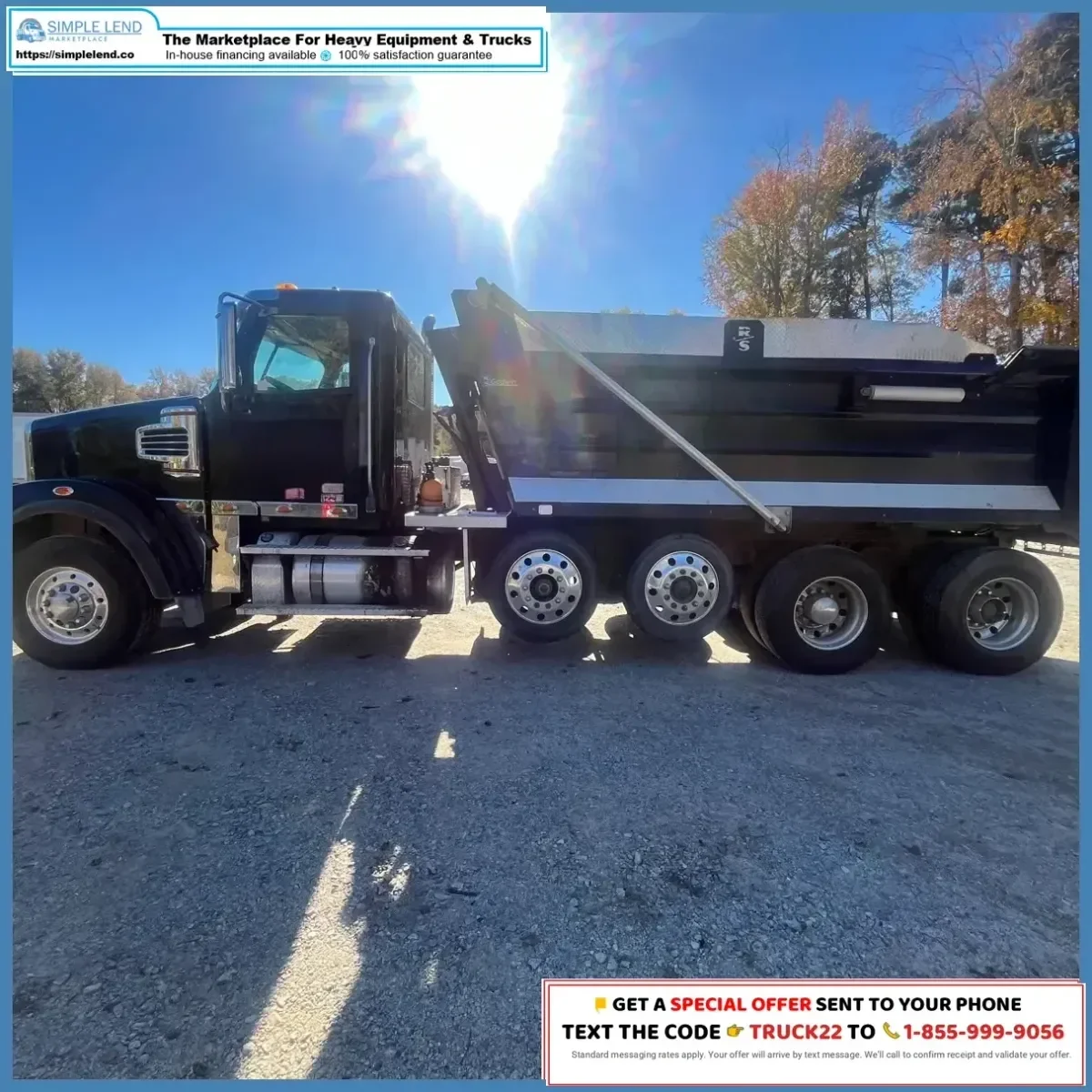 2023 Freightliner Coronado 122 SD $180,000
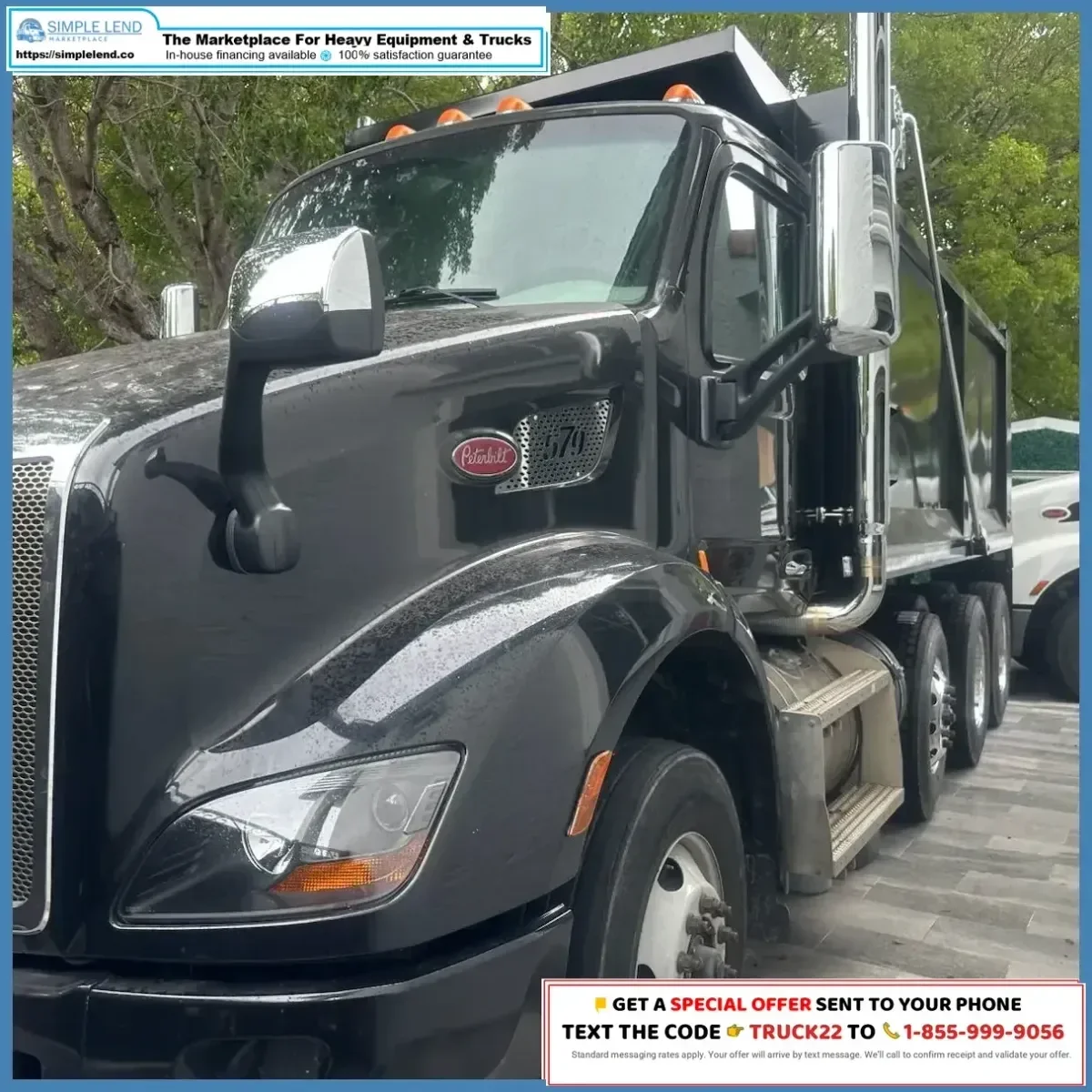 2022 Peterbilt 579 $145,000
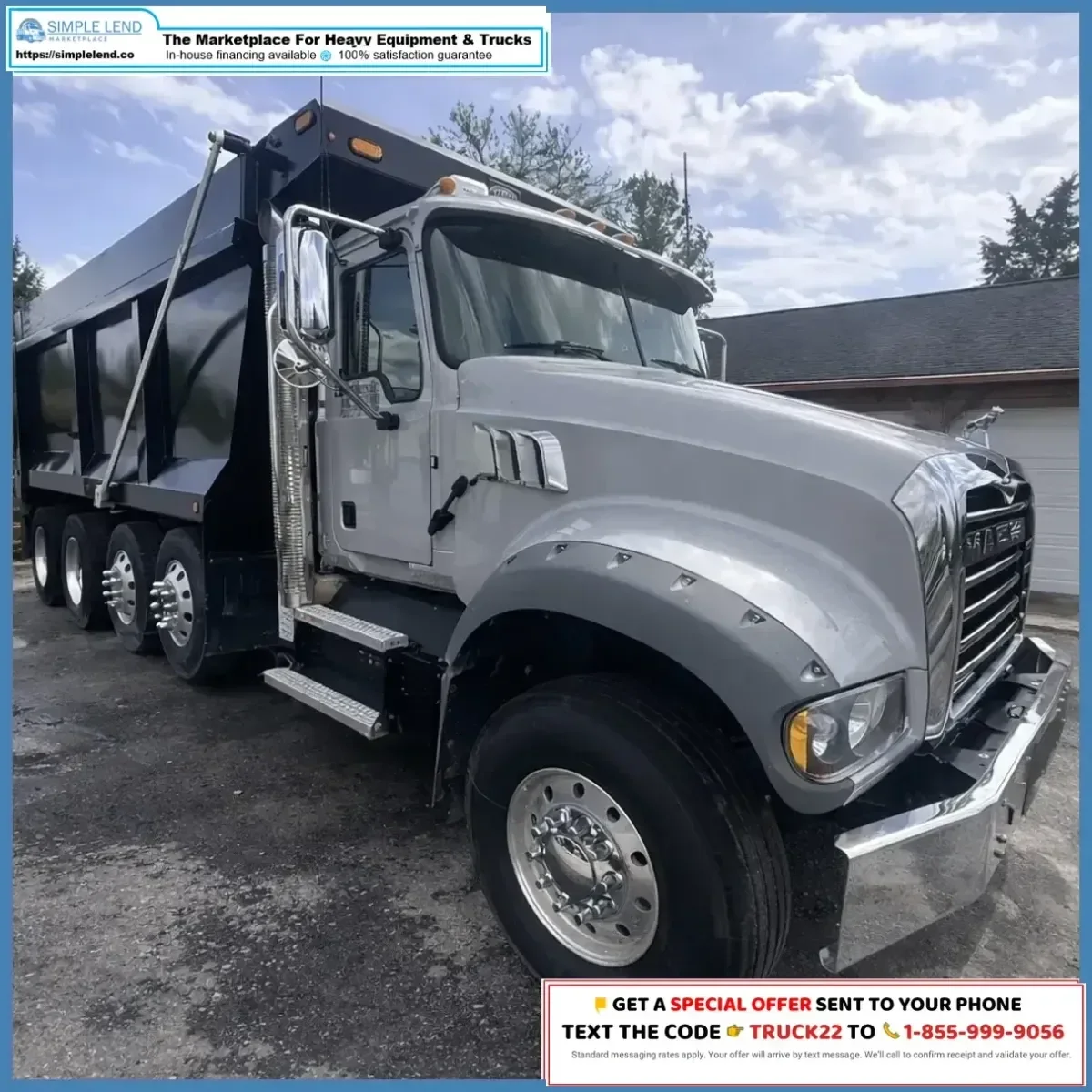 2022 Mack Granite 64FR Quad Axle Dump Truck $168,000
 2022 Western Star Other $170,000
Current asking-price benchmark · Browse all dump trucks for sale