Do Dump Trucks Need a DOT Number, Plates, and an ELD?
Updated 2026-08-07 · Simple Lend Marketplace
Most working dump trucks are Class 7-8 (26,001+ lbs), so a USDOT number is typically required — always if you run interstate or a 10,001+ lb vehicle in commerce, and often for intrastate too. Every dump truck must be commercially registered and plated; interstate operators usually need apportioned (IRP) plates plus HVUT (Form 2290) and IFTA. Many local short-haul operations qualify for the ELD exemption. Trucks over posted weight generally must stop at open weigh stations. Verify specifics with FMCSA and your state DMV.
USDOT numbers and commercial registration
A USDOT number is the federal identifier the Federal Motor Carrier Safety Administration (FMCSA) uses to track a commercial vehicle's safety record. Generally, you need one if you operate in interstate commerce, or if you run a vehicle over 10,001 lbs GVWR/GCWR in commerce. Because most working dump trucks are Class 7 or 8 (26,001 lbs and up), a USDOT number is typically required. Many states also require a USDOT number for intrastate commercial operation, so even a truck that never crosses state lines may need one — it depends on your state's rules.
Registration and plates are separate from the DOT number. Every dump truck used commercially must be titled, registered, and plated as a commercial vehicle, not as a personal pickup. If you run across state lines, you'll typically need apportioned plates through the International Registration Plan (IRP), which splits your registration fees among the states you travel in based on mileage. A truck used strictly within one state is usually plated under that state's own commercial (intrastate) registration instead.
This is general guidance, not legal advice for your specific operation. Thresholds, intrastate DOT rules, and weight classes vary by state and change over time. Before you put a truck to work, confirm your exact requirements directly with FMCSA and your state DMV or motor carrier office so you register correctly the first time.
Taxes, fuel reporting, and the ELD question
Heavy trucks come with a couple of federal tax and reporting obligations beyond registration. Vehicles with a taxable gross weight of 55,000 lbs or more owe the federal Heavy Highway Vehicle Use Tax (HVUT), filed on IRS Form 2290 — and states usually want to see proof of payment before they'll issue plates. If you operate interstate, you'll also likely register under the International Fuel Tax Agreement (IFTA), which consolidates fuel-tax reporting across the states you drive in into a single quarterly return.
Electronic logging devices (ELDs) tie to Hours-of-Service rules, and this is where many dump operators get good news. An ELD is required for most drivers who must keep Hours-of-Service records, but there are real exemptions. The short-haul exemption (staying within a 150 air-mile radius of your work-reporting location and meeting the time limits) lets many local and regional dump haulers skip the ELD entirely. Trucks with a pre-2000 engine are also generally exempt.
Whether you need an ELD comes down to how you actually run. A truck cycling gravel between a local pit and job sites may never need one, while a rig running long interstate hauls typically will. Driver licensing is a separate matter — see our CDL guide for who needs a commercial driver's license. For the exemption details, confirm with FMCSA rather than assuming, because the boundaries are specific.
Weigh stations and getting a used truck road-ready
Weigh and inspection stations exist to check that commercial trucks are within legal weight limits and mechanically safe. As a rule, commercial vehicles over the posted weight — commonly 10,000 lbs, well below any loaded dump truck — must stop at open weigh stations when signs direct them to. Skipping an open station you're required to enter can mean fines. Programs like PrePass or Drivewyze let enrolled, compliant carriers get a signal to bypass some stations, but enrollment and a clean profile are what earn the green light.
When you buy a used dump truck, none of this paperwork transfers automatically. You'll title and register it in your name and state, sort out your USDOT number and any IRP/IFTA/HVUT obligations, and confirm your ELD and driver-licensing situation before the truck earns its keep. Building that checklist before delivery keeps a newly bought truck from sitting idle while credentials catch up.
Simple Lend Marketplace connects buyers with sellers of used trucks, provides financing brokerage services through independent providers, and coordinates nationwide third-party delivery. We can point you in the right direction on getting road-ready, but we don't file your registrations or issue your DOT number, and we don't inspect, certify, or warranty any truck. Treat every listing as a used machine to verify, and lean on FMCSA and your state DMV for the compliance specifics.
Frequently asked questions
Do dump trucks need a DOT number?
Usually, yes. If you operate interstate or run a vehicle over 10,001 lbs in commerce, a USDOT number is generally required — and most working dump trucks are 26,001+ lbs. Many states also require one for intrastate commercial work. Rules vary by state, so confirm your exact situation with FMCSA and your state DMV.
Do dump trucks need license plates?
Yes. A dump truck used commercially must be titled, registered, and plated as a commercial vehicle. If you cross state lines, you'll typically need apportioned (IRP) plates that split fees among the states you travel. A truck run within one state uses that state's commercial registration. Your DMV handles the specifics.
Do dump trucks need an ELD?
Not always. ELDs apply to drivers who must keep Hours-of-Service records, but the short-haul exemption (staying within a 150 air-mile radius and meeting time limits) covers many local dump operations. Pre-2000 engine trucks are also generally exempt. Whether you need one depends on how you run, so verify with FMCSA.
Do dump trucks have to stop at weigh stations?
Generally yes. Commercial trucks over the posted weight — often 10,000 lbs, far below a loaded dump truck — must stop at open weigh and inspection stations when directed. Enrolled carriers can bypass some stations through programs like PrePass or Drivewyze, but that requires signing up and keeping a clean safety profile.
What taxes come with a heavy dump truck?
Trucks with a taxable gross weight of 55,000 lbs or more owe the federal Heavy Highway Vehicle Use Tax on IRS Form 2290, and states usually want proof of payment before plating. Interstate operators also register under IFTA for quarterly fuel-tax reporting. Confirm current thresholds and forms with the IRS and your state.
Does Simple Lend Marketplace handle registration for me?
No. We connect buyers and sellers of used dump trucks, provide financing brokerage services, and coordinate nationwide third-party delivery. We can point you in the right direction on getting road-ready, but we don't file registrations, issue DOT numbers, or inspect, certify, or warranty any truck. Registration and compliance are yours to complete.
Dump trucks for sale now
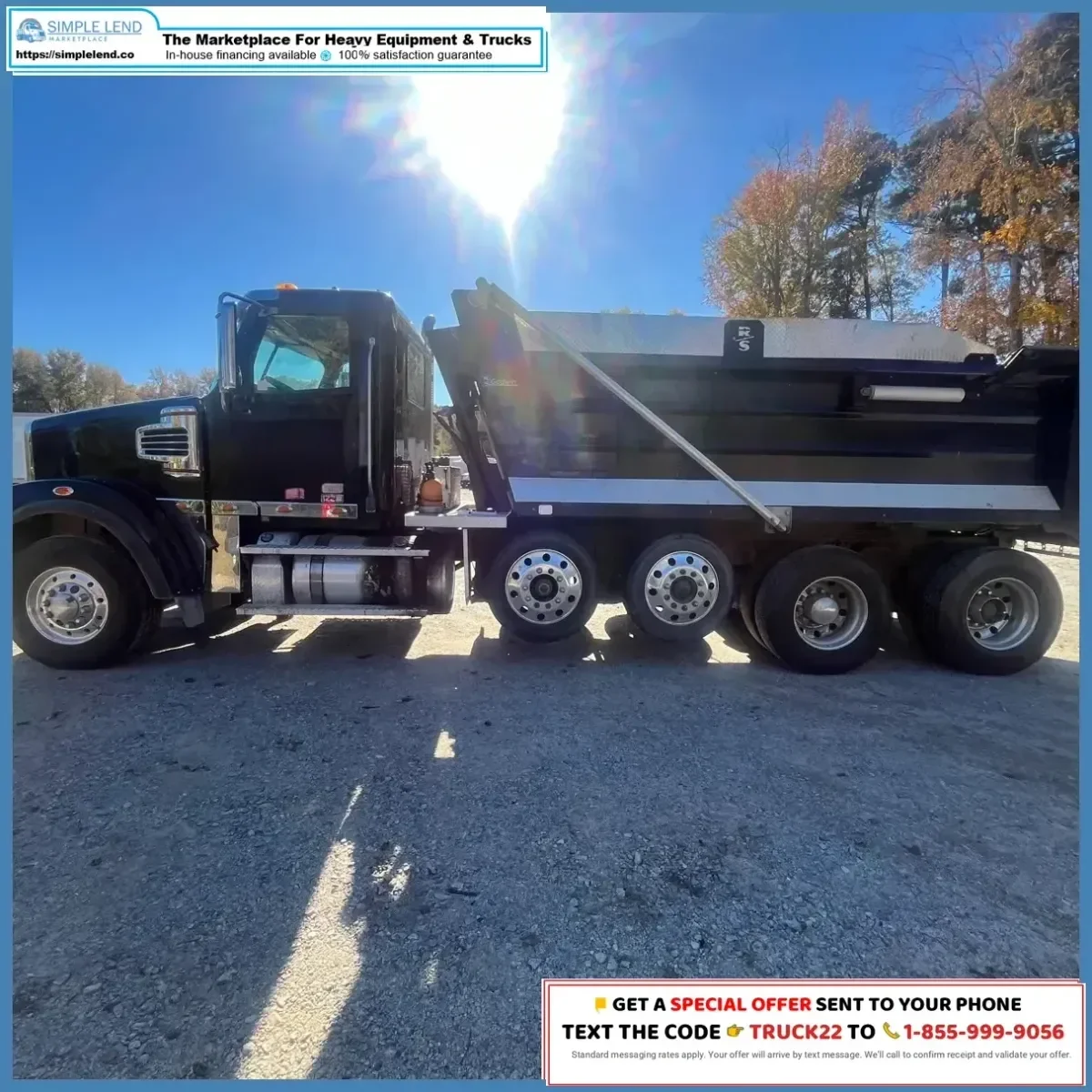 2023 Freightliner Coronado 122 SD $180,000
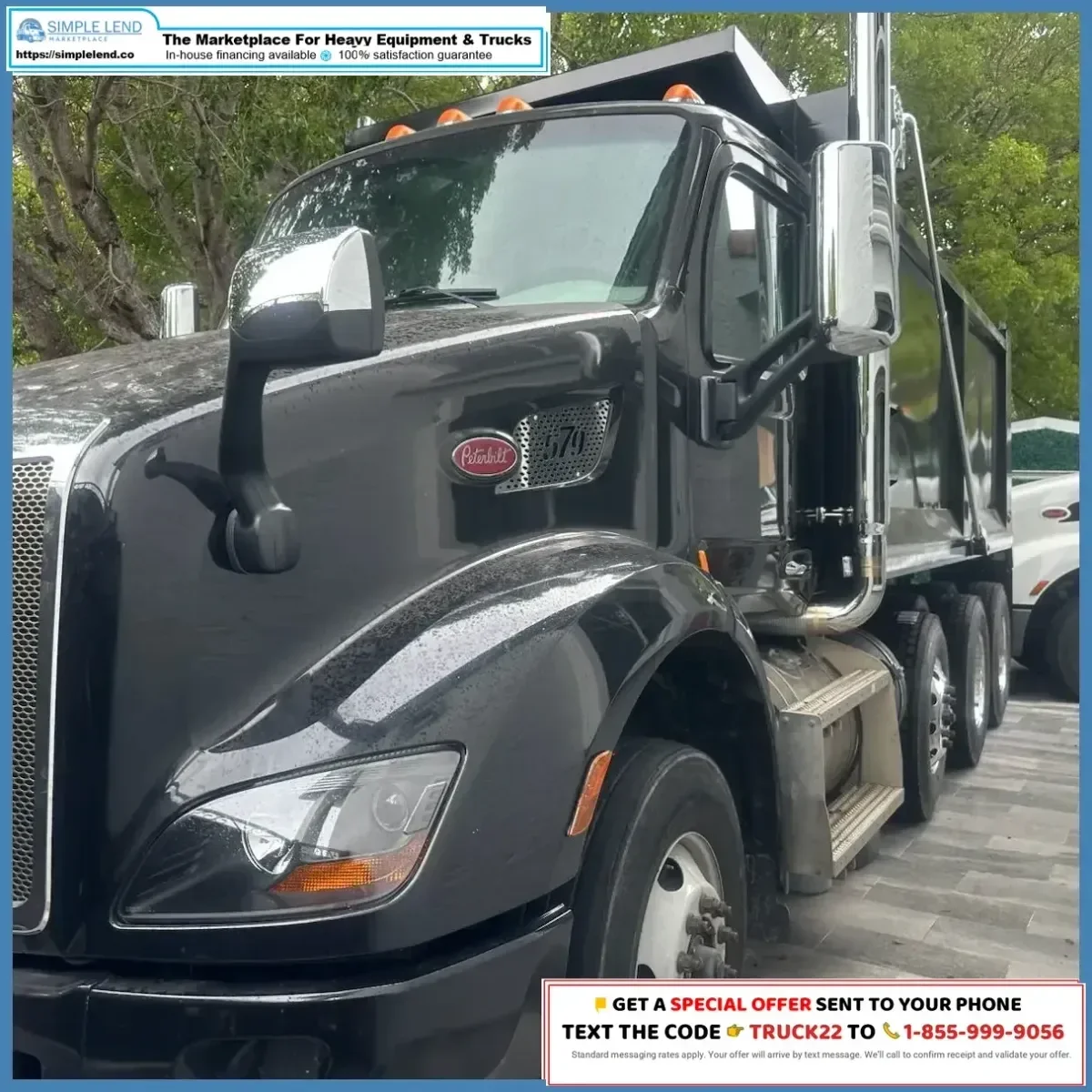 2022 Peterbilt 579 $145,000
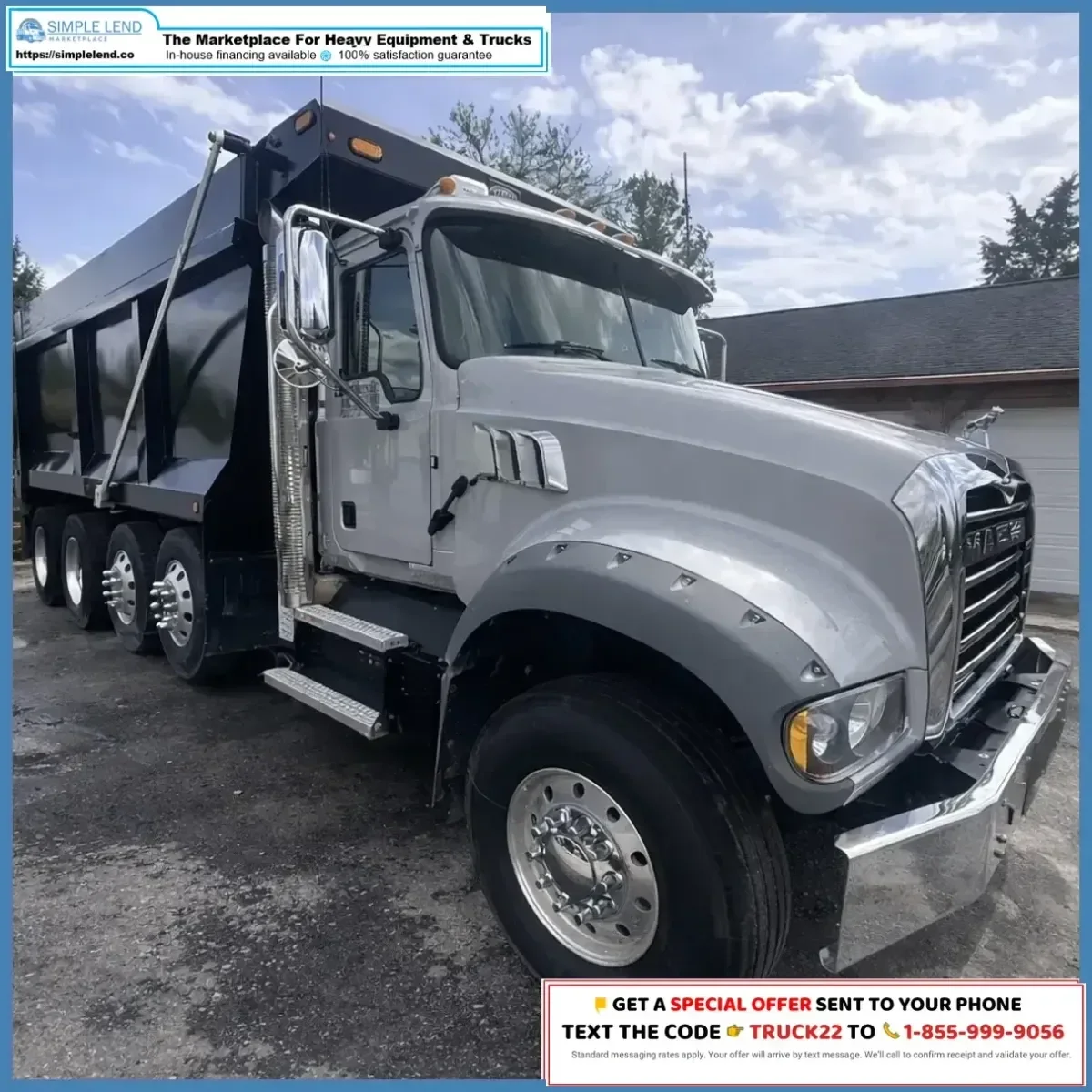 2022 Mack Granite 64FR Quad Axle Dump Truck $168,000
 2022 Western Star Other $170,000
Current asking-price benchmark · Browse all dump trucks for sale